
Yes, martial arts can help a child’s confidence by giving them regular opportunities to learn, improve, succeed and be recognised for genuine progress. At Blaze Martial Arts in Bracknell, children develop confidence gradually through kickboxing drills, individual correction, encouragement and achievable challenges.
Confidence rarely appears overnight.
It normally grows quietly, one small success at a time.
A child remembers a combination without help. They answer a question in front of the class. They hold the pads for a partner. They volunteer to demonstrate something they previously avoided.
Those moments might look small to an adult watching from the side of the hall.
To the child, they can be enormous.
At 6.45 pm on a Tuesday or Thursday, our Junior 2 class begins at St Joseph’s School in Bracknell. The gloves go on, the pads start making that familiar thud, and the class gets moving.
Some children arrive full of confidence.
Others walk in with their head down, avoid eye contact and hope nobody asks them to do anything in front of the group.
Both types of child have a place in the class.
Can martial arts help a child’s confidence if they are naturally shy?
Yes, martial arts can help a shy child because participation is introduced gradually. A good instructor doesn’t force a nervous child into the spotlight before they are ready.
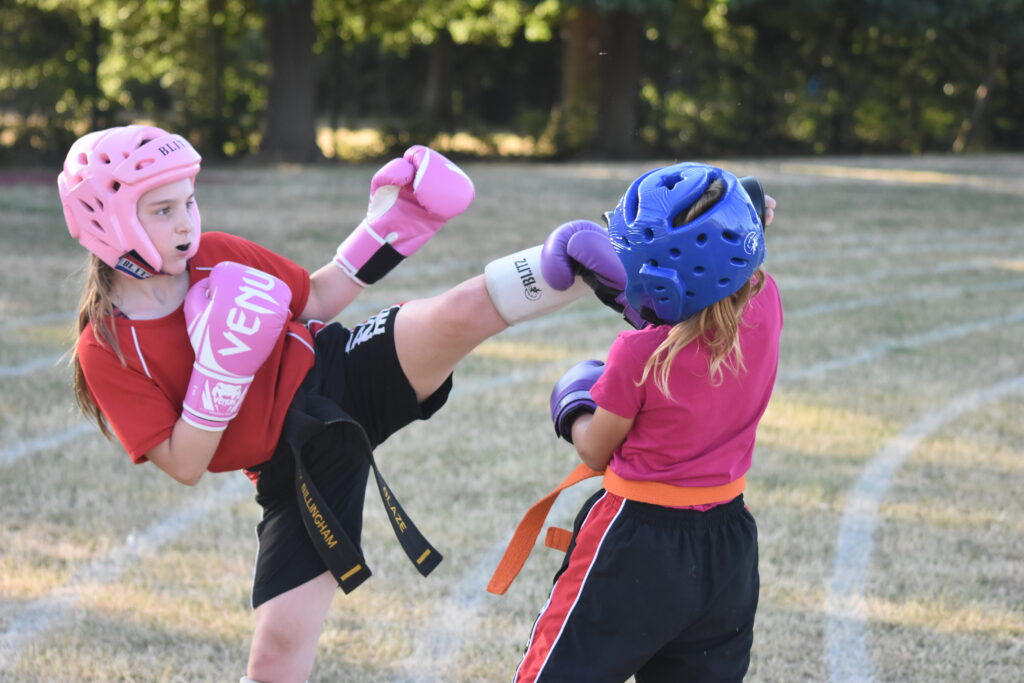
At Blaze Martial Arts, we work closely with each student.
We demonstrate the drill, get everyone practising and then walk around the class checking their technique. If someone is struggling, we help them. If someone is doing well, we tell them exactly what they have done correctly.
That matters.
A vague “well done” is nice, but specific praise is much more powerful.
“You kept your guard up.”
“That kick was much sharper.”
“You remembered the whole combination.”
The child starts to understand that progress isn’t based on luck. It comes from listening, practising and trying again.
Confidence is built through repeated proof.
I’ve been involved in martial arts for around 40 years, and Blaze Martial Arts has been running for 24 years. During that time, I’ve seen plenty of children change from quiet, hesitant beginners into confident students who are happy to take the lead.
They don’t suddenly become the loudest child in the room.
They become more comfortable being themselves.
How can Martial Arts help a child’s confidence through kickboxing
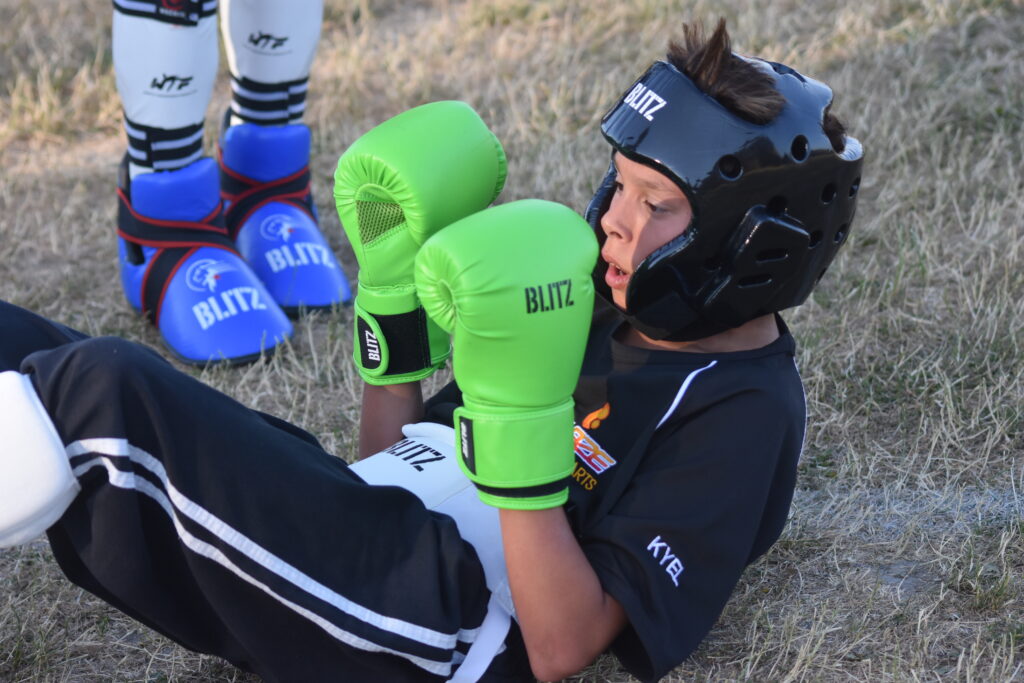
Kickboxing helps because improvement is visible. Children can feel when their punches become stronger, see when their balance improves and recognise when they can perform a drill that once felt difficult.
School can sometimes be challenging for a child with low confidence.
They may compare themselves academically. They may feel uncomfortable in team sports. They may worry about being picked last, getting something wrong or being laughed at.
Martial arts gives them a different environment.
The child isn’t required to score a goal for a team or be the fastest runner. They are working on their own progress while training alongside other people.
One student might be improving their front kick.
Another might be learning to keep their hands up.
Someone else might simply be gaining the confidence to work with a new partner.
All of those improvements count.
A well-run martial arts class also gives children structure. They know where to stand, what is expected and what happens next. That predictability can be reassuring for children who feel uncertain in unfamiliar situations.
At Blaze Martial Arts in Bracknell, our classes are disciplined, but they are also fun and high-energy. We include games and enjoyable drills where appropriate, particularly with younger students.
Children learn best when they are engaged.
Is kickboxing suitable for a shy child who doesn’t like sport?
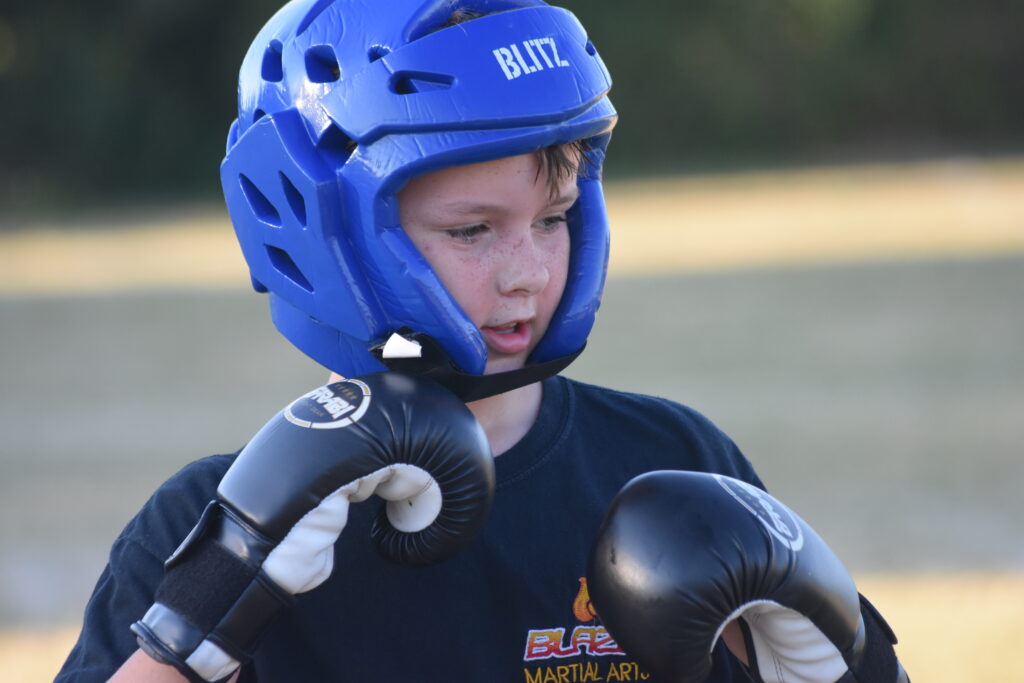
Yes, kickboxing can suit a shy child who hasn’t enjoyed traditional sport. They don’t need to arrive fit, confident, flexible or naturally athletic.
They only need to be willing to try.
Some parents assume their child must already be sporty before joining a kickboxing class. I don’t agree.
Martial arts should help a child become fitter. Fitness shouldn’t be an entry requirement.
The same applies to confidence.
A child doesn’t need confidence before starting. The class should help them develop it.
Our main instructors are black belts with at least 15 years of martial arts experience. That experience helps us recognise when a student needs encouragement, when they need a correction and when they need a slightly bigger challenge.
We are hands-on instructors.
Once a drill starts, we don’t stand at the front and leave everyone to get on with it. We move around the class, watch what is happening and help students improve.
Children notice when their instructor takes an interest in them.
Parents notice it too.
Will martial arts make my child more aggressive?
No, responsible martial arts training should improve control rather than aggression. Children are taught when techniques are appropriate, how to manage their behaviour and why respect matters.
This is an important point.
Kickboxing involves punching and kicking, but that doesn’t mean the class encourages children to fight outside the training hall.
We teach control.
We teach students to listen.
We teach them to stop when instructed.
We teach them to work safely with a partner.
A child who learns how to punch properly also learns that the technique must be controlled. They begin to understand the responsibility that comes with learning a combat sport.
Discipline and confidence work well together.
A confident child doesn’t normally need to prove themselves by showing off. They are often calmer because they feel more capable.
Martial arts training should produce controlled students, not aggressive ones.
Blaze Martial Arts has also achieved the Safeguarding Code in Martial Arts mark, supported by Sport England. This provides parents with additional reassurance that safeguarding and responsible coaching are taken seriously.
Can martial arts confidence carry over into school and everyday life?
Yes, the confidence developed in class can carry into school, friendships and other activities. A child who learns to attempt difficult techniques may become more willing to attempt difficult things elsewhere.
That doesn’t mean kickboxing magically solves every problem.
It gives the child useful experiences.
They learn that mistakes are normal.
They learn that improvement takes practice.
They learn that they can feel nervous and still take part.
They learn that getting something wrong in front of other people isn’t a disaster.
Those lessons can be applied well beyond the training hall.
A child who volunteers to demonstrate a kick may later feel more comfortable answering a question at school.
A child who works with different partners may become better at speaking to unfamiliar people.
A child who completes a grading may begin to believe they are capable of achieving other goals.
Progress creates belief.
Parents often ask, “Can martial arts help a child’s confidence outside the training hall?” In my experience, it can. A child who learns to speak up, demonstrate a technique or work with a new partner often becomes more willing to face challenges at school and in everyday life.
What happened when Seth joined our Bracknell Junior 2 class?
Seth was 11 years old when he joined, and he was extremely quiet. He kept his head down, rarely engaged and didn’t want to answer questions or demonstrate techniques.
He also avoided grading.
Over approximately nine to twelve months, things began to change.
Seth became more comfortable in the class. He started talking more. He participated properly in the drills and became willing to demonstrate in front of other students.
He eventually completed his first grading in June.
That grading mattered.
The belt itself was only one part of it. The bigger result was seeing a child who once avoided attention stand up and show what he had learned.
Seth’s confidence wasn’t handed to him.
He earned it through regular training, support and repeated effort.
That is exactly how genuine confidence develops.
Blaze Martial Arts currently teaches approximately 360 students across Bracknell, Windsor, Ascot and Wokingham. Every student is different, but the basic process remains the same.
We teach.
They practise.
We correct.
They improve.
They start believing in themselves.
Frequently Asked Questions
What age can a child start kickboxing?
At Blaze Martial Arts, children can begin from four years old in our Little Ninjas programme. Classes are divided by age so the teaching style, pace and drills remain suitable. Our Bracknell classes include groups for ages 4–6, 7–9 and 10–12.
Does my child need any experience before attending?
No experience is required. Most children who book a free trial have never trained in martial arts before. We introduce the basic movements gradually, explain the drills clearly and help each student individually. Beginners are not expected to arrive already knowing how to punch, kick or hold pads.
What should my child wear for a free trial?
Comfortable sports clothing is fine for a first lesson. A T-shirt, tracksuit bottoms or shorts usually works well. Avoid restrictive clothing or anything with hard zips. Any equipment requirements can be explained once your child has attended and decided they would like to continue.
How quickly will martial arts improve my child’s confidence?
Every child is different. Some begin engaging within a few lessons, while others need several months before the change becomes obvious. The important factors are regular attendance, patient instruction and achievable progress. Confidence usually develops gradually as the child becomes more comfortable and capable.
Can Martial Arts help your child’s confidence in Bracknell?
Blaze Martial Arts runs fun, disciplined and high-energy kickboxing classes at St Joseph’s School on Gipsy Lane, Bracknell.
Our Junior 2 class for children aged 10–12 runs every Tuesday and Thursday from 6.45 pm until 7.30 pm.
You know what, the easiest way to discover whether martial arts can help your child’s confidence is to let them experience a class for themselves.
Book a free trial lesson: Blaze Martial Arts
Alternatively, call 07551 195384.